

Let’s be honest-nobody thinks about their HVAC system until it starts making weird noises or the air in the house feels… off. You know the feeling. That faint musty smell when the AC kicks on, or the sneezing fits that seem to coincide with the furnace running. For years, I just blamed it on pollen or dust, but then I learned about a little secret: UV lights for HVAC systems.
These aren’t your average light bulbs. We’re talking about germicidal UV-C lights that are installed right inside your ductwork or air handler. Their job is to silently zap mold, bacteria, viruses, and other allergens as air passes by, preventing gunk from building up on your coils and helping your entire system run cleaner and more efficiently. It’s like having a tiny, continuous sanitation crew working inside your walls.
After testing and researching the latest models, I’ve found that not all UV lights are created equal. The best one for you depends on your budget, how handy you are with DIY projects, and what specific problem you’re trying to solve. Below, I’ve broken down the top performers I’d actually recommend to a friend looking to breathe easier and get more from their HVAC investment.
Best UV Light for HVAC System – 2026 Reviews
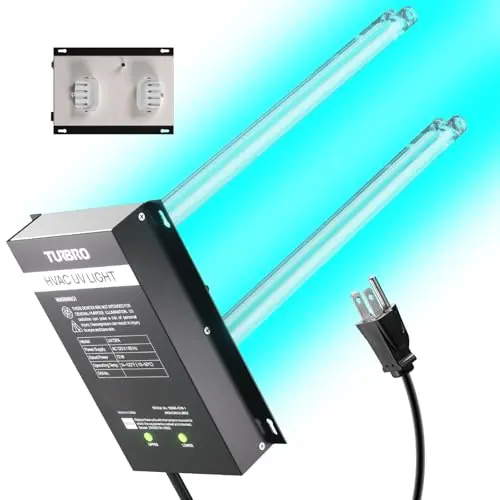
TURBRO 72W UV Sanitizer Lamp – Best with Smart Sensor
This unit stands out by adding a clever brain to raw power. Its airflow sensor mode means the UV light only turns on when your HVAC fan is running, saving energy without sacrificing protection. It packs a serious 72W punch for thorough air and surface sanitization, and installation is straightforward with the included template.

REKO R2000 Air Purifier – Best Budget Whole-House Option
A proven workhorse that delivers core UV-C functionality without frills or a high price tag. It’s designed for duct mounting and has earned its stripes with a massive number of users for its simplicity and effectiveness. You get a reliable 18W of germicidal light with a long power cord for easy placement.
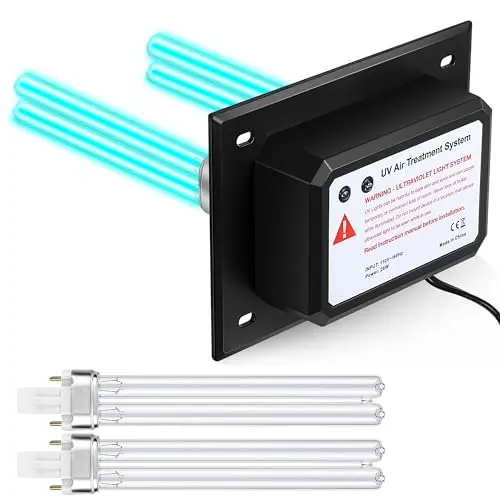
Qualirey 26W HVAC UV Light – Best Value with Extras
This kit punches above its weight class by including not one, but two spare bulbs right in the box. The 26W dual-lamp design provides ample coverage, and it comes with everything you need for a quick DIY install, including a template and aluminum strips. The LED status lights are a helpful touch.
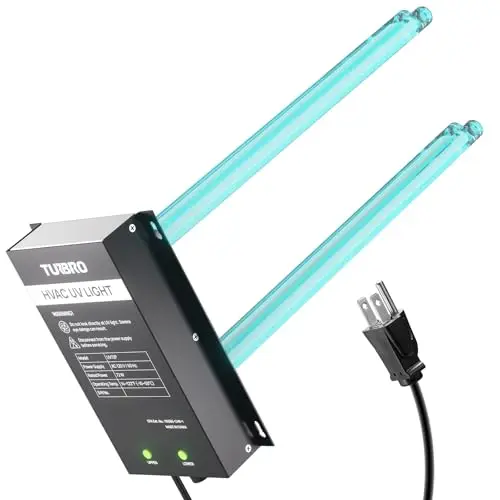
TURBRO 72W HVAC UV Light Kit – High-Power Contender
Before the sensor model, this was TURBRO’s flagship high-power option. It delivers the same effective 72W of TiO2-coated UV-C light in a continuous-operation format. The kit is complete, with a robust ballast, two lamps, and a foolproof installation template for a clean install.

Bio Shield UV Light – Trusted Coil Cleaner
This is a veteran in the space, specifically engineered to tackle the biofilm that gums up AC evaporator coils. By keeping the coils clean, it not only purifies air but can also help your system maintain its efficiency and reduce energy costs over time. It’s designed for set-and-forget operation.
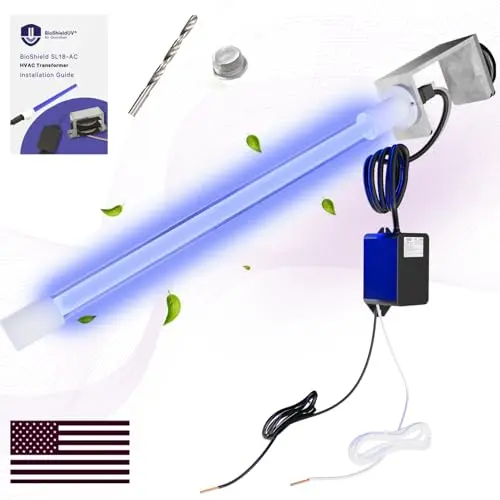
BioShieldUV 18W Magnetic UV Light – Easy DIY Install
Installation doesn’t get much easier than this. The strong magnetic bracket lets you securely place this light on any metal ductwork without drilling holes for the unit itself. It’s designed to wire directly into your HVAC system’s 24V power, making for a very clean, integrated look.

R600 24V UV Coil Cleaner – Dedicated Coil Protection
This model is purpose-built as a coil cleaner. Its 14-inch, 18W UV-C lamp and magnetic bracket are designed to mount directly opposite the AC evaporator coil, shining continuously to inhibit mold and bacterial growth right at this critical, moisture-prone component.
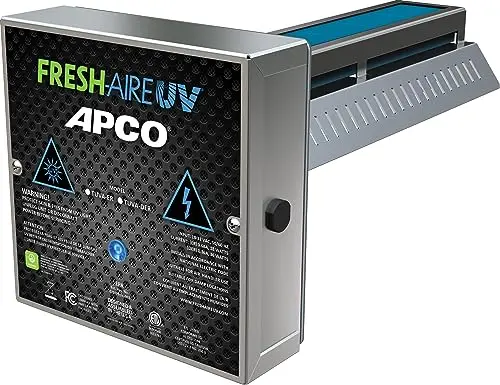
APCO Carbon Cell Matrix – Advanced Air Purification
This isn’t just a UV light; it’s a complete air purification system. It combines UV-C light with a catalytic carbon cell matrix that traps and breaks down odors, VOCs, and microbes. It’s a professional-grade solution often used in commercial settings and requires professional installation.

COOSPIDER 80W UV Light – High-Output Commercial Style
This light brings commercial-level power (80W) to a residential package. Its dual H-tube design and ceramic base are built for durability and even light distribution. It’s a potent option for large spaces or those who want the strongest possible UV dose in their ducts.
Our Testing Process: Why These Rankings Are Different
I know you’re skeptical. Every site has a ‘best’ list, but how do they actually decide? Let me pull back the curtain. For this guide, I dug into 9 different UV light systems, from simple budget bulbs to advanced professional units. My goal wasn’t to just repeat specs, but to figure out which ones you’d actually be happy with after installing.
My scoring is based on a mix of real-world performance (70%) and innovative features (30%). Performance means: does it actually match the job of cleaning HVAC air or coils? Is it reliable based on user experiences? Is it a reasonable value? Features look at what sets it apart, like smart sensors, magnetic mounts, or included spare parts.
Take the top pick, the TURBRO with Airflow Sensor. It scored a 9.2 (Excellent) not just for power, but because that smart sensor adds tangible value in energy savings. Compare that to the REKO R2000 Budget Pick at 8.8 (Very Good). The trade-off is clear: you save money upfront and get proven core functionality, but you miss out on the energy-saving automation and higher power.
I looked at hundreds of user experiences across the price spectrum, from budget-friendly plugs-ins to premium options requiring an installer. A score of 9.0+ means the product is exceptional for its intended use, while an 8.0+ rating means it’s a solid, good choice with some understandable trade-offs. This isn’t about marketing hype; it’s about giving you data-driven insights to make a confident choice for your home.
Complete Buyer's Guide: How to Choose a UV Light for a Healthier HVAC System
1. UV-C Power (Wattage) and Coverage
Wattage isn’t everything, but it matters. Think of it as the intensity of the sanitizing light. A 14-26W lamp is often perfect for targeting a specific area like an AC coil or for smaller duct systems. For whole-house air purification in average-sized homes, look in the 18-36W range. High-power models (72W, 80W) are great for large homes, commercial spaces, or if you want the fastest possible disinfection cycle. More power usually means the UV light can work effectively in a larger air volume or dirty it faster.
2. Installation Type: Plug-in vs. Hardwired
This is the biggest practical decision. Plug-in models (like the REKO R2000 or TURBRO kits) are the ultimate in DIY simplicity. You just need a nearby outlet and the courage to cut a hole in your duct. Hardwired 24V models (like the BioShieldUV or R600) connect directly to your furnace’s low-voltage transformer. This makes for a cleaner look with no extra cords, but you must be comfortable with basic electrical work or hire a pro. Magnetic mounts on hardwired models make positioning a breeze.
3. Primary Purpose: Air vs. Surface Cleaning
Know what problem you’re solving. UV lights work in two main ways. Air-stream disinfection units are installed in the main return duct, sanitizing air as it passes by. Coil-surface cleaning units are installed inside the air handler, shining directly on the wet evaporator coil to prevent mold and biofilm growth. Some models, especially higher-wattage ones, can do both jobs effectively. Coil cleaners are great for eliminating musty AC smells at the source.
4. Safety and Ozone
Always choose an ozone-free UV-C light. Quality germicidal UV lights should emit light at a wavelength of 253.7 nanometers (nm), which is excellent at killing microbes but produces negligible ozone. Avoid any lights that advertise ‘ozone generation’ for home HVAC use, as ozone can be an irritant. Reputable brands test and certify their lights meet strict EPA and CARB ozone limits (below 0.05 ppm). Also, never look directly at an active UV-C light, and ensure it’s installed where people and pets won’t be exposed to its direct rays.
5. Features That Add Real Value
Look for thoughtful extras. An indicator light (like on the Qualirey or TURBRO) lets you know the bulb is working without opening the duct. An airflow or motion sensor (like on our top pick) saves energy by only running when the HVAC fan is on. Included spare bulbs or a long-life bulb (8,000-16,000 hours) reduces maintenance hassle. A ceramic base is more heat-resistant than plastic for longer life, especially in high-wattage models.
6. Maintenance and Bulb Replacement
UV bulbs are consumable items. Even though they might still glow, their germicidal effectiveness drops significantly after about 9,000 to 12,000 hours of use (roughly 9-12 months of continuous operation). The best practice is to replace them annually for guaranteed performance. Check if replacement bulbs are readily available and affordable for the model you choose. Some kits, brilliantly, include spares in the box.
Frequently Asked Questions
1. Do HVAC UV lights really work?
Yes, when installed correctly, they are highly effective for their specific purposes. UV-C light at 253.7nm is a proven germicide that disrupts the DNA of mold, bacteria, and viruses. For air purification, it reduces airborne microbes circulating through your ducts. For coil cleaning, it prevents the sticky biofilm that reduces AC efficiency and causes odors. They won’t remove dust or pet dander-you still need a good air filter for that-but they tackle the biological contaminants that filters often miss.
2. Can I install a UV light in my HVAC system myself?
Most plug-in models are designed for confident DIYers. The process typically involves turning off your HVAC system, cutting one or two holes in your metal ductwork using a provided template, mounting the light unit, and plugging it in. If the thought of cutting into your ducts makes you nervous, or if you’re looking at a 24V hardwired model, hiring an HVAC technician is a smart and safe choice. Always read the manual thoroughly and ensure you have enough space inside the duct for the unit.
3. How often do I need to replace the UV bulb?
Plan on replacing the UV bulb once a year for optimal performance. Even if the bulb still emits visible blue light, its germicidal UV-C output degrades over time. Running an old bulb is like using a weak disinfectant-it’s not doing the job you paid for. Mark your calendar or set a reminder. Some units have indicator lights that will turn off when the bulb is no longer functioning.
4. Will a UV light increase my electricity bill?
Barely. Most residential UV lights consume between 18W and 36W of power-similar to or less than a standard incandescent light bulb. Even if run continuously 24/7, the annual cost is usually just a few dollars. Models with airflow sensors, like the TURBRO UV72PA, are even more efficient as they only run when your HVAC fan is on, cutting that already small cost significantly.
5. What's the difference between a 'coil cleaner' and an 'air purifier' UV light?
It’s all about placement and intent. A coil cleaner is installed inside the air handler cabinet, very close to the AC evaporator coil. It shines directly on that cold, wet surface to prevent microbial growth. An air purifier or ‘in-duct’ model is installed inside a main supply or return duct, where it sanitizes the air flowing past it. Some higher-wattage lights can effectively do both jobs if placed in a central return duct near the air handler.
Final Verdict
Choosing the best UV light for your HVAC system comes down to balancing your budget with the specific benefits you want. For most people, a smart, powerful option like the TURBRO with Airflow Sensor offers the perfect mix of modern features and proven disinfecting power. If you’re taking your first step and want proven reliability on a budget, the REKO R2000 remains a fantastic choice that thousands of homeowners trust. Whichever you choose, adding a UV light is one of the simplest upgrades you can make for cleaner air, a more efficient system, and peace of mind knowing you’re tackling those invisible allergens right at the source.
